
The #1 CRM For Real Estate Investors
Simple, Fast and Powerful. Texting Blast to get more Leads, Contracts, and Traffic
There are lots of platforms out there that help you manage your business and its follow up, but when it comes to text-pipeline management - none can compare.
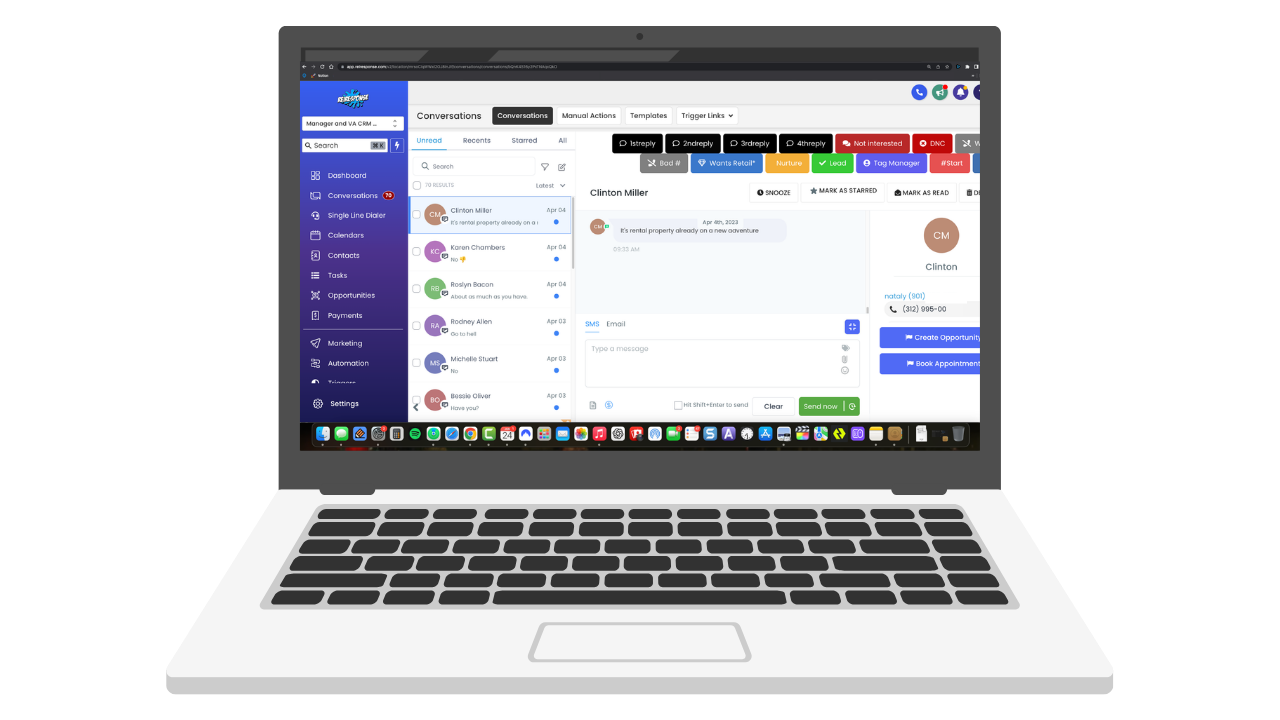
A Complete Real Estate CRM & Texting Software With Calltools Integration
SMS Marketing Campaign
Send one by one or via drip mode. Find those deals asap!
Novation & Wholesale Tracker
You have pipeline to manage a deal from A-Z. All those unique novation steps like Memo and Invoice.
FREE Training on Calltools Integration
You do need a paying subscription with calltools to use the dialer and we highly recommend it. It will save you hours of time!
All In One Place
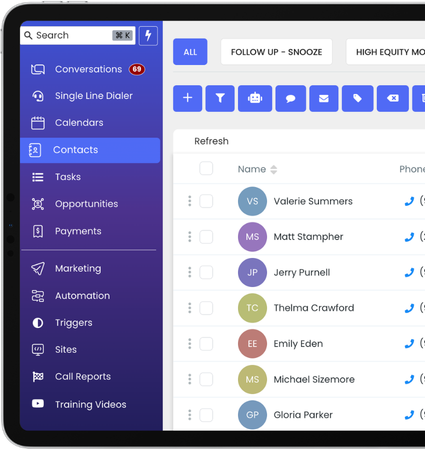
Manage Contacts
You can organize property owners, cash buyers and agents all with one platform
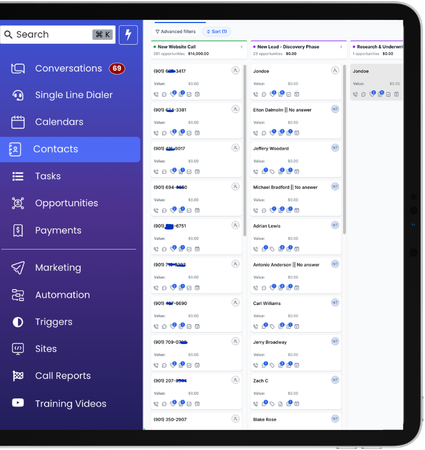
Seller Lead Pipeline
Manage your property owners in this pipeline. This will allow you to manage from the second you get the lead alll the follow up till they are ready for an offer. this pipeline helps you track and make offers on property owners property.
Relationships That Pay Dividends
Agent Outreach Pipeline
This pipeline is meant for finding new agents and following up with current agents. This ensures you have a ready flow of properties coming your way!
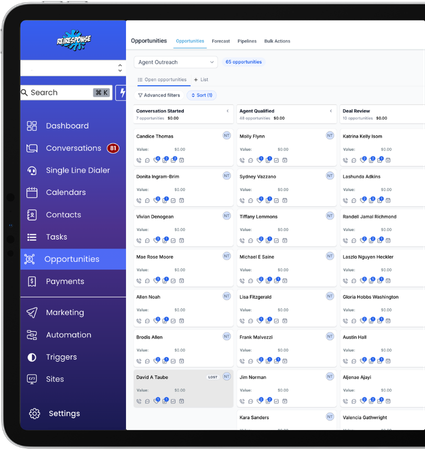
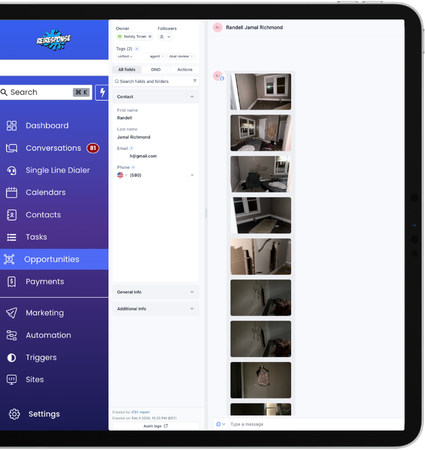
Agent Listings Pipeline
Once the relationship is built this pipeline is the place you manage each property the agent sends you. This will allow you to track and manage all the offers you make on the agents listing or pocket listings.
Sell Your Deals To Retail Buyer
Novation Contract Pipeline
Track every step of a novation deal. A novation deal structure allows you to list the property on the mls with the help of an agent. This agent will find a buyer who will buy it as-is with a bank loan. Minimal repairs before or after closing. Bigger buyer pool in down markets or rural markets. 3X your assignment fee with a bigger buyer pool than traditional cash buyers who need a huge discount to flip or add to rental porfolio.
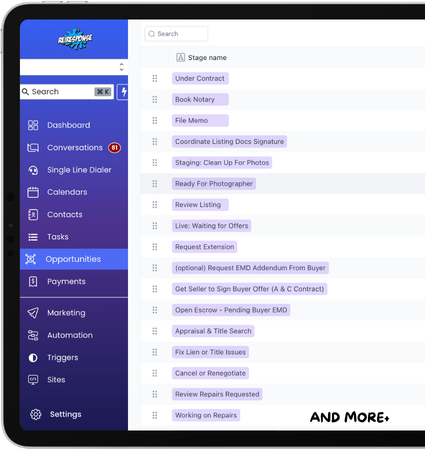
Wholesale Contract Pipeline
Track every step of a wholesale deal. From the deal blast creation to the EMD in title company.. to closing day!
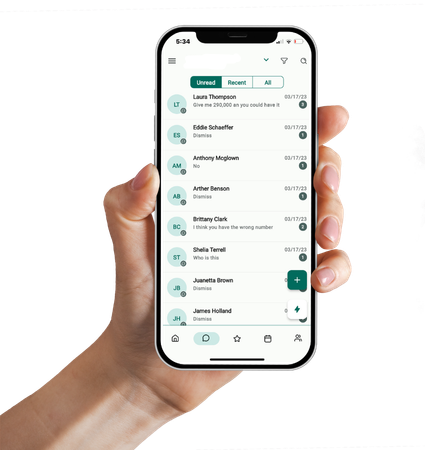
Respond to SMS campaigns directly from our app
Keeping track of conversations is tough, but remember to keep two-way messages in mind. Texts and emails are good ways to stay connected with friends who live far away or you haven't seen in a while!
Grow your business with FREE LEADS
Google rewards you by ranking you higher if you provide value through your website and many people interact and fill your form.
Feel free get in touch with us
Copyright © 2026 ReiResponse LLC. All rights reserved. Brooklyn NY